
tk999 on the Move: Betting in Dead Time
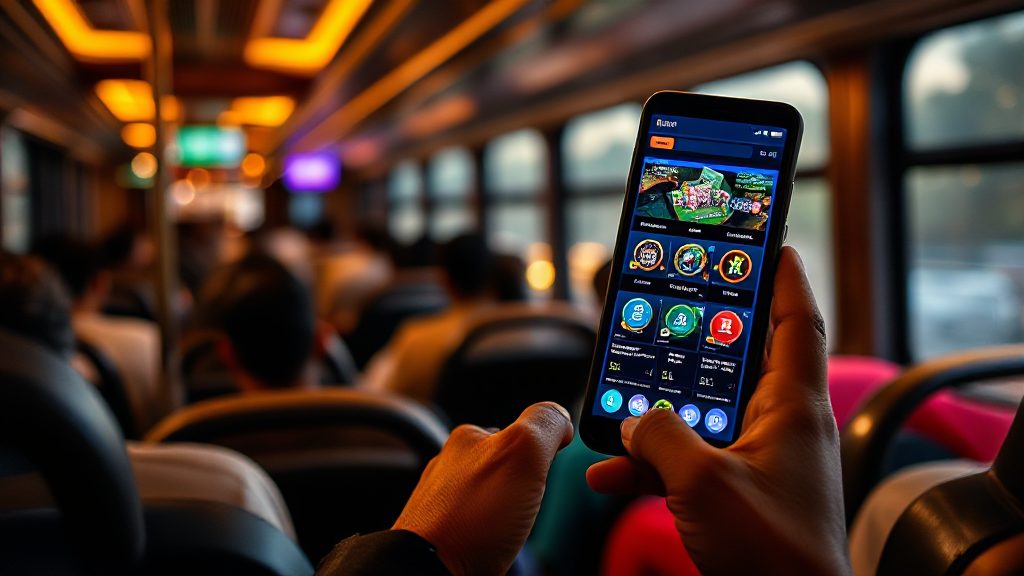
The bus is wedged between a rickshaw and a lorry, the engine idling, the meter of your journey stalled somewhere near Farmgate. You have forty minutes of nothing ahead of you. Most passengers scroll social media, but a growing number open tk999 and check a market or two. It is the same platform you might use at home on a laptop, yet somehow the experience feels different here — more urgent, more private, more like a small ritual carved out of a stalled day. Why does betting in transit feel unlike betting in your living room?
The bus journey as a betting window
Dhaka traffic has a way of turning a fifteen-minute hop into an hour-long sit. That dead time is not empty; it is a pocket where nothing is expected of you. You cannot work, you cannot get up, and nobody can ask you to do anything. For a lot of Bangladeshi users, that pocket is exactly when they open the app, log in, and look at the day’s fixtures.
The bus itself shapes the behaviour. You are surrounded by people but effectively alone behind a phone screen, and the low hum of the engine becomes background noise. Bets placed here tend to be quick and small — a single market, a glance at the odds, then the phone goes back in the pocket. Transit betting rewards brevity, and that brevity is part of the appeal.
What people actually do in those minutes
- Check a match schedule before the signal drops in a tunnel or underpass.
- Compare a couple of odds while the bus is stationary rather than while walking.
- Place a small wager and then deliberately stop looking until the journey ends.
- Top up an account so the next stop does not catch them short.
None of these actions take long, but they give the commute a shape. The trip stops being pure waiting and becomes a series of small decisions.
Queues, waiting rooms and the long sit
Not every wait happens on a bus. There is the queue at a bank, the hour in a hospital corridor, the slow afternoon at a government office where the token number has not moved. These are the places where the phone becomes a portable waiting room, and where a betting platform can feel less like entertainment and more like a way to mark time.
Queues have a particular psychology. You cannot leave, you cannot speed things up, and the only thing you control is what you do with your attention. Users who open tk999 in a queue tend to treat it as a distraction rather than a serious session — a quick look at a live market, a check on an earlier bet, a browse through the app’s sections. The context sets the stakes: nobody in a queue is planning a long, careful betting session.
The difference between a five-minute wait and an hour
A five-minute queue invites a glance. An hour-long wait invites a habit. In longer sits, users are more likely to register an account, download the app, or read through the platform’s menus properly. The wait becomes a chance to learn the interface rather than just tap at it.
This is also where the downloadable app matters. A browser tab is fine for a quick check, but a long wait is easier to fill with an app that opens instantly and remembers your login. The smoother the entry, the more the dead time gets used.
Why the same activity feels different in transit
The platform does not change when you leave the house. What changes is you. At home, betting sits inside a routine — you have your chair, your screen, your tea, and the possibility of doing something else. In transit, the activity is compressed and slightly illicit-feeling, even when it is perfectly ordinary. The phone screen is small, the surroundings are public, and the whole thing has the texture of a secret rather than a hobby.
There is also the matter of interruption. A bus can lurch, a queue can suddenly move, a conductor can shout. Transit betting is defined by its interruptions, and that makes users cautious. They bet smaller, they check less often, and they are more likely to close the app the moment their stop is called.
Finally, there is the waiting itself. Dead time makes people restless, and restlessness makes small decisions feel more satisfying than they would at home. A wager placed in a queue carries a little of the queue’s impatience with it.
What this means for how you use the platform
If you know you will be waiting, decide before you leave what you are willing to spend and what you are there to do. Treat the transit session as a short, bounded activity rather than an open-ended one. That single habit keeps the commute from turning into an unplanned hour of scrolling.
It also helps to know your connection. Mobile data in a moving bus is unreliable, and a dropped signal in the middle of a session is frustrating. Users who plan around that — checking odds offline, waiting for a stationary moment to confirm — tend to have a calmer experience.
Making dead time work for you
The best use of a commute is not to fill every second. It is to recognise that waiting is a real part of the day and to give it a shape that suits you. For some people that means a book; for others it means a quick look at a market on tk999, a small wager, and then putting the phone away before the bus reaches the next stop.
The platform is built for that kind of use — registration is quick, the app is downloadable, and the interface is designed for a phone in one hand. But the discipline has to come from the user. Dead time is only as good as the boundary you put around it.
So the next time the bus stalls and the queue refuses to move, notice what you reach for. If it is your phone, notice how you use it. The difference between a pleasant pause and a wasted hour is usually just a decision made before you sat down.


Leave a Reply